

/SHORT STORIES
three short stories completed for NYC Midnight’s 2026 Flash Fiction challenge
final round - 9th place overall
genre: open / location: beachfront property / object: instruction manual
Go Into the Ocean
Sophie adjusts her phone between her ear and shoulder, then grabs the lighter from the counter. “It’s not working.” Her other hand turns the knob on the stove. Click, click, click. Her attention gravitates to the massive stone on her ring finger. In the year since it became a permanent fixture on her hand, she’d only lost weight. Why was it so tight now?“I’m sure your fiancé could have fixed it, if you let him come.”“Penny, please. I don’t want to talk about him.”“You're getting married to this man in two months. How can you say that?”“You don't understand.” Sophie grimaces and squeezes the lighter trigger. The stove burner doesn’t ignite. “He doesn't see me at all. He doesn't hear me. I have to repeat myself a million times before he even acknowledges my feelings. And this morning...Penny, I can't do it.”“Can’t do what? The wedding? Sophie, you’re almost—”“I don’t want to talk about it.” Sophie slams the lighter on the counter. “This fucking stove.”“Some vacation you’re having.”Sophie leans against the counter and surveys what was meant to be a pre–wedding getaway. The cabin is nothing like the photos in the listing, all dated furniture and dim lighting. The ocean beyond the French doors is the only amenity seemingly as advertised. “I’m gonna go. There has to be a manual or something.”“Don’t have too much fun.”A brief search of the rental reveals a worn white binder beneath the sink with the crudely written title: Instruction Manuals. Inside, Sophie finds only one page, torn at the edges and yellowed with age. Scrawled in the penmanship of a child:How to Become a MermaidFind something shiny in a tidepoolGive a peace of treashure to a sea creatcherGo into the ocean. MUST BE AT NIGHT! Keep swimming intil your tail apearsYou are now a mermaid!!
Sophie is surprised by her own amusement. It’s far from a solution to the dysfunctional stove. It’s something she might’ve written herself, when she and Penny were kids. She runs a thumb over the waxy, blue letters.Outside, the low sun splits the sky into magenta, lavender, and deep marine. She walks along the water, frothy swells playful against her toes. Her shoes and phone she’d left at the cabin, but the paper is folded against her palm. Perhaps it's silly and unimportant, but in the midst of the wedding, the vacation, and that damn stove, nothing sounds more appealing than being a mermaid. The tidepools are tucked into a crop of barnacle-encrusted rocks. Sharp edges meet the soft soles of her feet. She remembers how to tread so they don’t cut.Beneath the glassy surfaces of the tide pools are soft anemones, starfish, crabs contained within spiral shells. Nothing that shines. So she looks on, at sun-bleached rocks, flourishes of frilled orange, barnacle tongues, ridges on the shell of a mussel. Green shore crabs the color of sea foam scuttle from shelter to shelter. The vibrant ecosystem blurs into a mosaic of dusk–drenched color.There—a ribbon of silver.It started when she turned thirty. She’d scour her scalp for that dreaded glint, that strand that caught the light differently. She’d fish it from her brown locks with tweezers, only to find two more sprouting the next week. They were the color of her lost time, her wasting value. She was well into her thirties now, and the silver was too aggressive to be subdued. It declared her failures and her desperation.But it was the shiny thing she saw in the tide pool, that streak at her temple. And if it could turn her into a mermaid, could it be so horrible?A purple shore crab shuffles out of the pool and pauses before her. It’s massive for its kind, nearly the width of her palm. It wears a carapace of deep, iridescent plum, and only one claw at its front. She’s not sure if it's the fading light that’s convinced her of its pointed observation.With her thumb and forefinger, she plucks them from their spot. The crab swings their lone claw in slow, agitated circles. Bubbles spew from their mouth. Her smile falls. She knows the feeling all too well: angry, flailing, and utterly trapped.“Oh…I’m sorry.” She sets them down. The tears that follow are quiet and unexpected, and the first to touch her lips tastes of brine. She slides the ring from her left hand. “Do mermaids get married?” The band is gold, inset with a square cut diamond. She’d always preferred silver, and she’d always loved opal. Still, she’d squealed and clapped her hands and jumped up and down when he proposed with it. She was almost forty, after all, and any ring at that age was her dream ring.When she was young, she never dreamed of a ring at all.She extends it to the crab, vaguely aware of the absurdity of the action but too entangled in it to care. “Do you like it?”The crab clasps the band and retreats to the tidepool, as if that were their very purpose for emerging in the first place.Sophie is left in the company of the hollow wind and the ever–growing waves behind her. She knows how fast the tide can reclaim its shore. The moon is out now, a low, narrow crescent. In the distance, the light she left on at the cabin is a yellow hazard, a warning to stay clear. She’s certain now that she’d rather be a mermaid than deal with that gas stove—or anything that came after.The tides rolling in are loud, enthusiastic. She’s unsure of the last time she swam, but she knows she’ll fare much better without being bound to a rock.She walks to the edge of the sea, the small swells cold and textured around her ankles. Foam clings to her skin like scales. She can’t feel her toes, buried in the sand. She goes into the ocean and swims.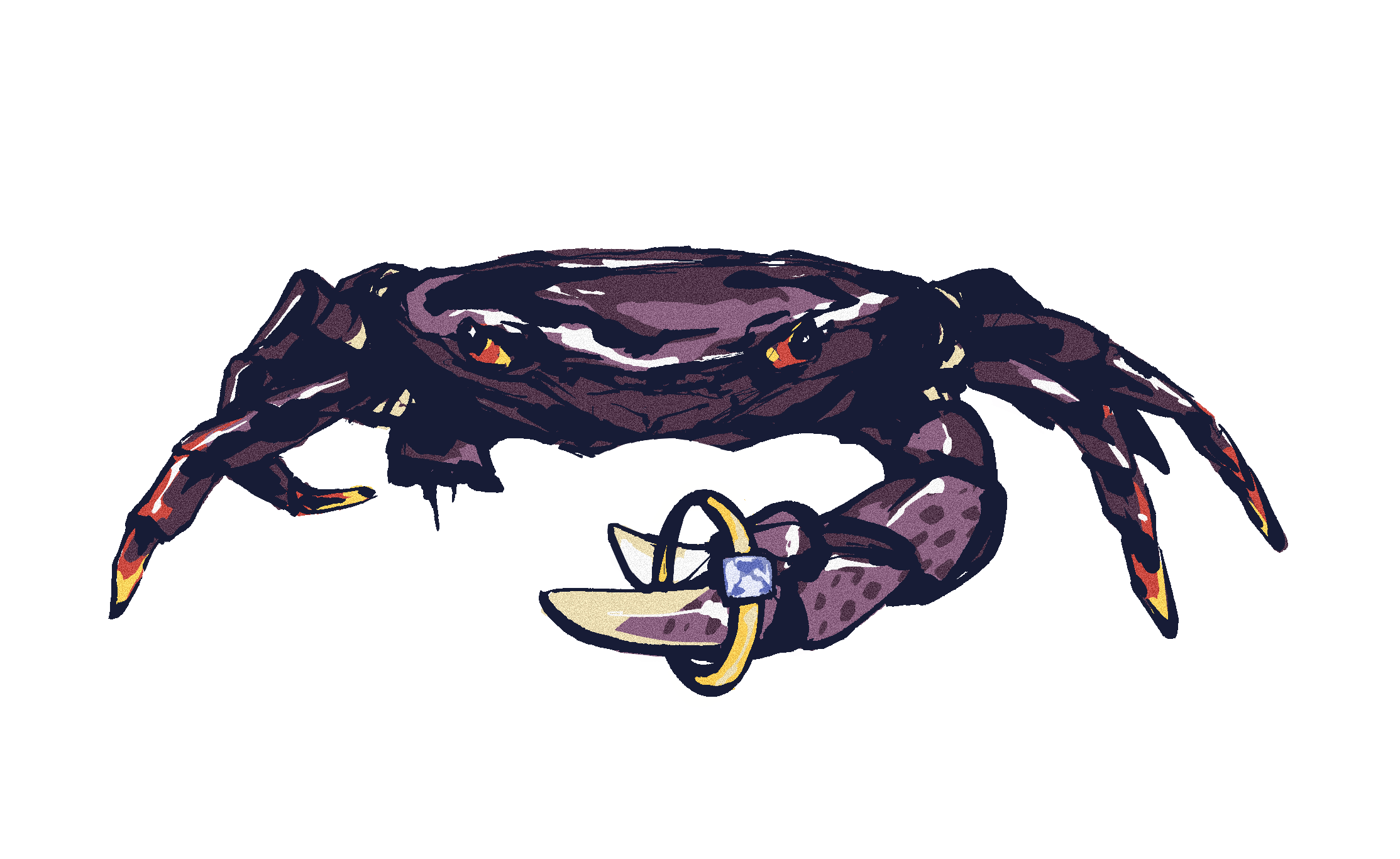
round 2 - 1st place in group
genre: ghost story / location: construction site / object: utility vehicle
Red-winged Blackbird
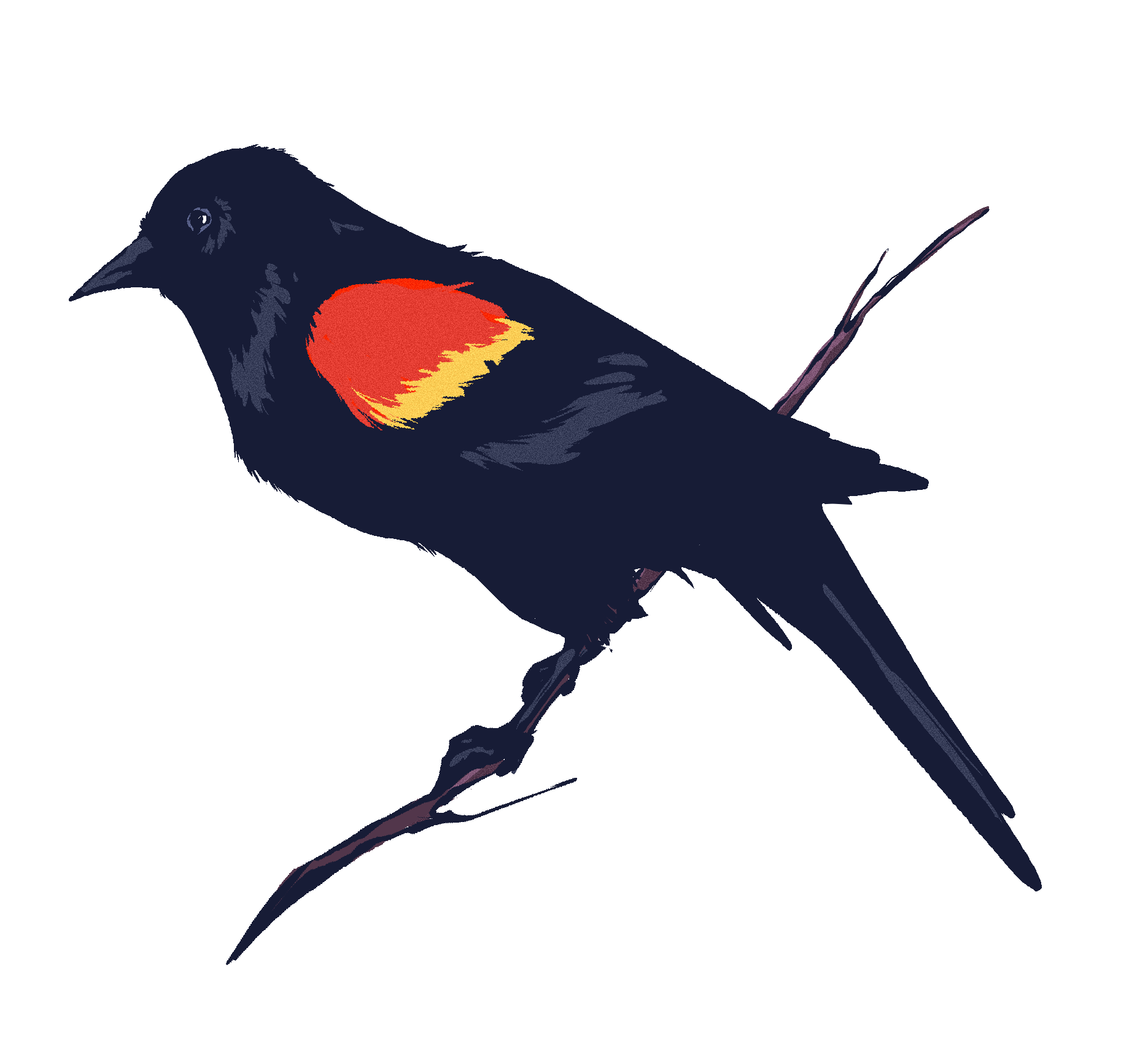
Daniel leans forward and tightens his grip on the wheel. The headlights of the utility vehicle do little to combat the haze that descended with the night. There’d still been others when he left to discard the leftover concrete slurry in the nearby woods, but judging by the lack of noise and activity, he’s the only one left.The dirt path is uneven, carved and stamped into something close enough to level. It’ll be paved in the coming days, maybe weeks. He’s not sure when, and he’s not surprised. The entire project is a clusterfuck. Even he knows better than to build on a wetland, dried up and cleared out or not. If there’d been anything else available, he would’ve—The left side of the vehicle teeters up, then dips back down. Something crunches beneath the tire. He wants to ignore it, but that crunch seemed to crush something in him, too. He pulls off to the side.There’s a small mass in the road. As he nears, it becomes a structure of twigs and grass and mud: a nest. It’s constructed with all of the care of a parent, maintaining its shape even after sustaining the weight of the UTV.The eggs inside are broken, tiny shards of pale blue that remind him of the color of his daughter’s painted nails.Daniel stands straight and turns in an inquisitive circle. There’s nothing but flattened ground, recently–poured foundations, and abandoned construction equipment. There are no trees, no shrubs, no reeds left to build a nest in. It’d all been cleared weeks ago. He looks up, as if it could’ve been nestled in one of the clouds that hung heavy in the sky. He knows this nest, and these destroyed eggs. He found one, once, in the marsh behind his grandmother’s house, perched in the tall, stiff grasses. He was nine or ten—he couldn’t remember for sure—and he’d worn his green rainboots that day. Still, water sloshed inside and soaked his feet. The eggs were so fragile, he’d accidentally crushed one between his thumb and forefinger. He’d dropped the rest when the father found him, a raging flurry of inky wings and red and yellow.He’d expected his grandmother to comfort him when he came gasping and crying to the back door, but she only cared for what the bird lost.Daniel’s chest is tight, like there isn’t enough room for his lungs to expand.The guilt follows him down the road, past the exposed skeletons of the infantile apartment complex, and to the makeshift lot where his car sits, alone. He parks the UTV crooked next to the trailer and starts for his car.But he pauses next to the foundation of the building he’d devoted his time and body to today—its warped studs, the black mold crawling across the sill plate, the gaps between planks that were meant to be flush and the angles that were anything but square. He was told it was fine, that once the insulation and drywall and siding went up, none of it would matter. A bird call splits his thoughts: two notes, then a sustained trill.Daniel finds the bird perched on a joist and backlit by the floodlights, black feathers interrupted by a burst of red and yellow on each shoulder. The bird’s scarlet epaulets bristle up and out as he releases another song.“Was that your nest?” Daniel raises his hands in surrender. “I didn’t mean to.”The bird lifts his bill to the sky, then shifts, foot by foot, to better display his bright plumage.“This…” Daniel lets his hands fall. “This was your home, wasn’t it?”Another three-part song, another spectacle of red.Daniel runs a hand along a stud. Everything, gone, for this. He gestures to his surroundings, defeated. “There’s nothing left. I can’t bring it back.”The bird dives.Daniel lifts his arms in time to protect his face, but talons lodge in his forearm and tear skin. He runs for the car as the blackbird pushes up, up again, and unfurls his wings to arc back around.Daniel slams the car door shut and the bird aborts his second dive, wings beating against the window, once, twice. Then he’s gone.Daniel draws a breath and unlatches one of his hands from the wheel to grab his phone, left abandoned in the passenger seat. His arm is bleeding, but he doesn’t feel it. On the screen, a string of messages from his wife:The landlord called again
I told him you’re getting paid this friday
Please tell me its this friday
The kids miss you :( i thought you were coming home at 8??
His fingers hover over the keyboard, but there’s nothing to say. Nothing will change.A drop of water shatters into a collection of clear pearls across the windshield. Another, then another. The roads flood easily in this part of the city—he knows better than to wait.Daniel doesn’t turn onto the road. Instead, he drives back through the site and down the shoddy path to the crushed nest.He exits the car to a worsening downpour and begins to excavate a hole in the earth with his hands. The dirt lodges beneath his nails, bleeds between his fingers, settles in the creases of his palms. The ground softens with the rain, and with each fistful of soil, he feels its grain and life. The wetland is still there, beneath the denial.He sets the nest inside with its broken shells and pushes the displaced dirt back over it. The rain settles the loose soil and lodges it into place. Painted in blood, rain, and dirt, Daniel retreats to his car and drives home.Under the sour halogen beams of the floodlights, the rain continues to penetrate the earth. The roads flood and ground shifts. The wetland drinks. That night, the foundations begin to sink.
round 1 - 3rd place in group
genre: drama / location: pastry shop / object: ice cube
Spring Heatwave
Four ceiling fans rattle overhead. Susan peruses a menu she collected from the counter. It’s pink and lavender, the colors of the rhododendrons in her front yard. They bloomed earlier than usual this year, and already the flowers were wilting—she’d noticed that morning as she was leaving for Mass.The man in line in front of her shakes his head. “Can you believe this weather?”“It’s barely April,” Susan agrees. “I can’t imagine what the rest of the year will be like.”“The Earth and its cycles.”Susan offers a tight smile in response. She eyes the American flag on his shirt and decides that she has better things to do than argue with his type.“Dad.” The girl standing with the man points at a heavily frosted slice of cake in the glass display. “I want that one.”“Okay. Whatever you want.”Susan winks at the girl and fans herself with the menu.The door opens, and with it, a rush of hot air and the silvery chime of the bell. A man walks in, pauses at the door, then shuffles into line behind her. He’s muttering to himself, but she can’t tell what he’s saying. She nods at him in friendly greeting. He coughs, then continues muttering.She’s not sure why she came to the pastry shop today. She only used to come for her kids, who would beg for a treat after Mass. It was so many years ago.
Mark pulls his daughter closer. “Ew.” His daughter scrunches her nose. “What’s that smell?”Mark keeps his voice low. “It’s that homeless guy. Look, it’s our turn. Let’s order so we can get out of here.” He ushers her to the counter.“Sorry about the wait,” the cashier says. Mark can tell the moment she sees—or smells—the new customer. Her rehearsed cheer drops for just a second before it's reapplied. “What can I get for you?”“Hi.” Mark pulls his wallet from his back pocket. It’s made of tan canvas, like his ruck when he was in the Marine Corps. It was years ago, but the reminder of the worst years of his life brings him comfort, in some inexplicable way. “Just a slice of—” he looks at his daughter. “Which one was it?”Her eyes flit from him to the cashier, then back to him. Quietly: “That one.” She points again.“That one, I guess,” Mark says. “And just an iced black coffee for me.”“That’ll be nine dollars and twenty–eight cents.”Mark releases a heavy gust of air from his mouth as he taps his card. “Ten dollars. What’s next, you’re gonna charge me a kidney?”The homeless man coughs. Mark turns to shoot him a glare.“Oh—do you want to try again?” The cashier avoids eye contact as she says it.Declined.“Huh.” Mark’s heart rate jumps. “Must’ve used the wrong card.” He thumbs his credit card out of his wallet. The wife won’t be happy, but his daughter will be. So he puts nine dollars on the credit card. “Name?” “Why? You gonna confuse me with one of them?” The customer jerks a thumb at the other two in line.Jas’s cheeks burn. “It’s just standard.”A scoff. “It’s Mark.”“I’ll get that started for you.”“Thank you, Miss…” Mark leans into to peer at their nametag. Jas pulls back slightly. “Jas. Weird name. What’s that short for? Jasmine?”“It’s just Jas.” They can hear their heart in their ears.“You go ahead,” the old woman says to the homeless man. “I haven’t decided yet.”Jas’s stomach twists on itself as the unhoused man approaches the counter. Still, they work up a smile before asking: “How can I help you?”The man stares for a long moment, then opens his mouth to speak. He’s missing several teeth and his breath is sour. Jas retains their practiced expression, but flinches when he coughs again. Once, they weren’t so afraid of a stranger’s cough. Now, they worry it will ignite the next pandemic.“Hey,” Mark barks. “You sick or something?”The unhoused man looks at Mark, then back to Jas. “Sorry. It’s just—”“It’s a yes or a no.”“It’s fine,” Jas interrupts. “Let me just take his order then I’ll make yours.”Mark disregards them. “If you’re sick, you need to leave.”“Dude, I just want some fucking water. Or like, a cup of ice. It’s five million degrees outside.”Jas looks up at the ceiling and prays that a god they don’t believe in will smite down the building.Steven’s throat is raw; this cough has lasted weeks. Maybe months, maybe years. He doesn’t know when it started, just that it’s gotten worse. “How about you go beg for scraps somewhere else?” The agitated man gestures at his daughter. “There are kids here.”“Well, if you let me get my fucking water, I would leave!” Steve realizes too late he’s raised his voice. He brings it down. “Sorry.”But the man’s hand is on his waist, and Steven knows what’s holstered there. The old woman gasps.“Try somewhere else.” “Okay.” Steven raises his hands in surrender. “I just wanted a water. My throat’s killing me.” He backs away, past the old woman kind enough to let him order first, then out of the pastry shop. The air is like ash against the back of his throat.Susan approaches the counter. She’s not sure why she stayed. “Are you okay?” That’s why.Jas nods and draws a shaky breath. “Yeah, um…sorry. What can I get for you?”“I’ll just have a coffee, thanks. I don’t really care for sweets anymore.”Susan stays a while to talk with Jas, and it reminds her of when she brought her kids to the pastry shop after Mass.